Haunted Objects and Human Meaning
There is something intriguing about the idea of a haunted object. Let’s face it, haunted dolls are pretty big business these days. You only need to google “haunted doll” or look it up on eBay and there is no shortage of “haunted” dolls for sale. They are usually older porcelain dolls that fit a stereotypical haunted doll look, complete with a history of the spirit supposedly attached to the doll. Then the debate starts about whether objects can even become haunted. My answer is simply “I don’t actually know”. These everyday items sit in a room absorbing the conversations, the energy, the aura, the surroundings and the history as time goes on. They outlive people and become part of the background of our everyday lives, sometimes for generations. This makes them the perfect candidates for a haunting.
We could sit and debate all day over whether or not an object is haunted, but I want to pose a different question. Why is it that we think it is possible in the first place? Perhaps by understanding this first, we might just answer our own question.
Every object has its own life before it even reaches us. Someone has used it, stored it, treasured it, held it, loved it or ignored it. When you walk into an op shop (the term for a second-hand store here in Australia) you really get a sense of this. Every item sits there in various stages of use with no fancy new packaging. It is there “as is”. There is usually a certain kind of smell. It is musty and often reminds me of the same smell you get when you enter a historical house. It almost feels like the smell of history, the smell of a story. When we look at museums, they too are full of items that still hold the story of the people who touched them.
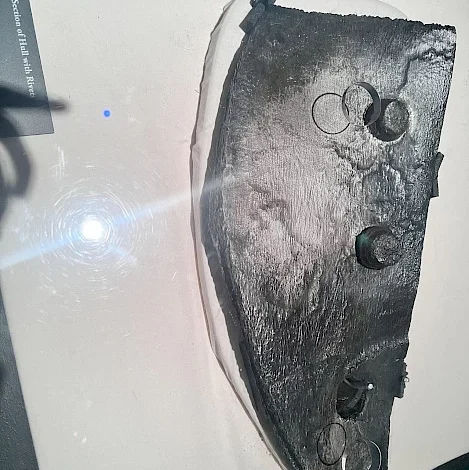
I vividly remember attending the Titanic exhibition in Melbourne where you could touch a piece of the original hull that was retrieved from the ship. I remember touching it, thinking about how many people before me had touched it (and sort of thinking maybe that was a bit gross and I would need some hand sanitiser), but here you had a significant piece of history with millions of people wanting to feel a part of it. I have always been hugely interested in Titanic, but for me, I found the exhibition a bit underwhelming. There was a lot of hype around it, but as I stood and looked at the hull, it just looked like a piece of metal. It was the story that made it special, and perhaps that is the key.
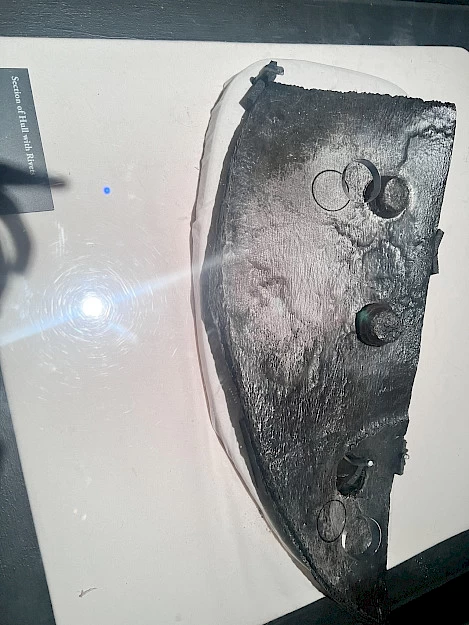
When you look at this picture, do you see a piece of metal or a part of the hull from the Titanic?
When someone tells you an object is haunted, the story becomes part of the object. It is not just a doll anymore. It is a “haunted” doll. It changes how you look at it. A simple old doll becomes the doll that once moved on its own. A mirror becomes the mirror connected to a tragic event. The narrative forms the identity of the object. In many cases, it replaces its history. In many situations, the haunting begins with the story long before any unusual experiences take place. It is the doll that makes people feel like they are being watched or that they have fallen on unfortunate times at the hands of the doll. Would the doll have any significance without the story? If bad luck occurred, would you blame it on a random doll sitting in the corner, or are you blaming it on the doll because it fits the story?
Humans have always given meaning to inanimate things. We talk to our cars and even give them names. We keep the personal belongings from our loved ones long after they have passed away. We attach emotion to jewellery, photographs and keepsakes. It is a normal way of processing memory, emotion and even grief. Labelling something as haunted is really just another form of meaning we are assigning to something.
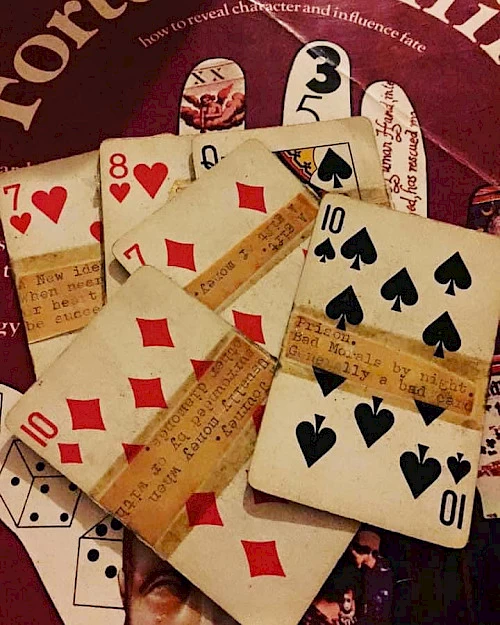
I have spoken many times about a special item that I inherited from my grandmother who has passed. It is a deck of cards that she used to use to “read her future”. The cards are over 70 years old and have hand-typed meanings on them. They are very fragile and incredibly special to me. I had always wondered why I was so drawn to tarot. I didn’t know my Nan was into any of this until after she passed and my Auntie gave me the cards and said she thought I should have them. All of a sudden, I learnt about a side of my grandmother that I didn’t know existed. The deck of cards now had a very special meaning and connection. It is all centred around their story.
Haunted objects are a focus for many paranormal investigators and are anchored by a story. There has to be a story or otherwise again, it just becomes another doll. There are countless chairs at Black Rock House, but there is one chair that is a part of the history of the house. It belonged to one of the original owners and people have experienced something while sitting in this chair. They don’t seem to have these experiences in any other chair in the house. Is it because the chair is really haunted or a trigger item, or is it because the idea is planted in their head that they are sitting in a special chair? They are sitting in the same chair that other people have had experiences in and the chair is connected to the previous owner of the house. Maybe the owner doesn’t like people sitting in his chair? Is the chair haunted or is it haunted by its own story?
Objects can reflect our own internal world in a way. A haunted object may be our way of expressing fear, memory, cultural belief, superstition or even unresolved emotions. It may highlight the way we respond to uncertainty or the meaning we attach to the past. In this sense, the object becomes a mirror. It allows us to see parts of ourselves that we might not usually stop to notice or that we even choose to ignore. Whenever I write an article about cognitive bias, without fail, I will always receive a comment somewhere that it does not apply to that person. They saw through the illusion or they could see what was there without a red circle. Whatever bias it was, in that moment, it did not apply to them and they believed they were immune. Unfortunately, no one is immune to the powers of our own brain and we know that the biggest barrier to paranormal research is actually ourselves. From cognitive bias to belief, these are all things within us. We cannot fully control them, but we can be aware of them.
I never dismiss someone’s experience with a haunted object. Their feelings are very real to them and deserve respect. If they were to ask me if I really thought they were experiencing a haunting, I would have to look at every side. Psychological factors, environmental conditions, history and yes, the possibility of something actually being paranormal in nature. Instead of asking only whether the object is haunted, it can be more beneficial to ask why the object evokes a particular reaction. That question leads to far more insight than a simple yes or no. Maybe whether or not the object is haunted does not matter. It is the meaning that we assign to it that matters.
Cover Image of a doll at Black Rock House. This doll has no story, nothing to really note except it is in a room decorated like a 1850’s nursery and it is an old, worn porcelain doll. On ghost tours and paranormal investigations, people naturally ask, “Is it haunted?”. The question is asked not because they feel anything, but because they are there to seek out paranormal experiences and they are looking to assign meaning. Interestingly, no one thinks anything of it during regular day tours, it is simply an period piece that fits the asthetic of the room.
If you enjoy LLIFS, consider buying me a book (otherwise known as buy me a coffee but I don’t drink coffee and I LOVE books). Your donation helps to fund the LLIFS website so everyone can continue to access great paranormal content and resources for FREE!