Ivory Pyx Found in Austrian Hilltop Shrine
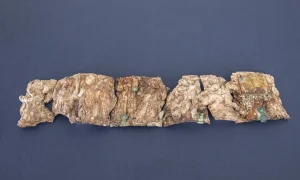

Excavations on a late antique hilltop in Irschen, southern Austria, have revealed something extraordinary: a marble altar cache holding a fragmented but richly carved ivory pyx—a small Christian reliquary box dated to around 610 AD. Only about forty such pyxes are known worldwide, and this is the first found in an archaeological context in Austria. Researchers say the imagery blends Old and New Testament scenes in a way not seen before.
Stay Informed on the Unexplained
Every Friday we send out the top 5 most intriguing UFO & paranormal stories—direct to your inbox.
Subscribe to the Newsletter
What the team found under the altar
Archaeologists uncovered a sealed marble shrine beneath a side-chapel altar. Inside were dozens of warped ivory pieces, metal hinge remains, and small wood fragments. The pyx had once been the “holiest” container in the church, likely housing a relic. Yet when the site was abandoned around 610, the broken pyx was buried in place instead of being removed—preserving a rare snapshot of early Christian practice.
Unique carvings: Moses, a divine hand, and a two-horse “Ascension”
The preserved panels show a hand of God extending from the clouds to give the Law to Moses—an Old Testament scene carved in fine detail. On another section, a figure is drawn up toward heaven in a biga, a two-horse chariot, again led by a divine hand. Researchers interpret this as a previously unknown way of depicting Christ’s Ascension, though Elijah’s ascent is also discussed. Either reading is striking: it couples covenant and fulfillment across Testaments on a single portable shrine.
Restoration without breaking the past
Because the ivory soaked up moisture for centuries, the largest fragments are deformed. Physical reassembly would damage them. Therefore, conservators are performing a virtual 3D reconstruction to “rebuild” the reliquary without stress. At the same time, lab teams are running material studies—stable isotope tests on the ivory and marble, metal analyses of the hinges, and wood identification—to trace trade routes and workshops that might explain how such a refined object reached a mountain church on the empire’s edge.
Why the find matters
- Rarity: Very few ivory pyxes survive; most sit in cathedral treasuries without excavation context.
- Iconography: The two-horse “Ascension” motif is, so far, unique. It may reflect local theology, artisan creativity, or a workshop tradition yet to be mapped.
- Frontier Christianity: The shrine freezes a moment when Mediterranean Christianity still reached Alpine valleys—just before the region’s upheavals around 610 changed faith, population, and art.
What comes next
Expect a full digital model, new high-resolution renderings of the panels, and comparative studies with museum pyxes. Those steps should clarify the scenes, the artisan’s hand, and the pyx’s origin—whether North African, Italian, or another late-antique center that traded carved ivory to communities far beyond Rome’s former borders.
Quick glossary
Pyx (pyxis): A small round box, often ivory or precious metal, used to hold relics or consecrated hosts. In late antiquity, pyxes were frequently decorated with biblical scenes.