Resource Directory Hightlight: Parapsychology: A century of enquiry by D. Scott Rogo
If you follow my blog or are just visiting for the first time, as you scroll through the different articles, you will see a very wide range of topics discussed. This is not information I automatically know about. They are things I have often come across in some ways through my research. There are so many amazing books and resources available that can really help with your paranormal research. A lot of these are books written by people who in some way have been influential. Often, they are books that are very old and no longer in print. To buy the hard copy can cost up to thousands, however, there are free public domain pdfs online which is a good second choice!
Visit the LLIFS Resource Directory
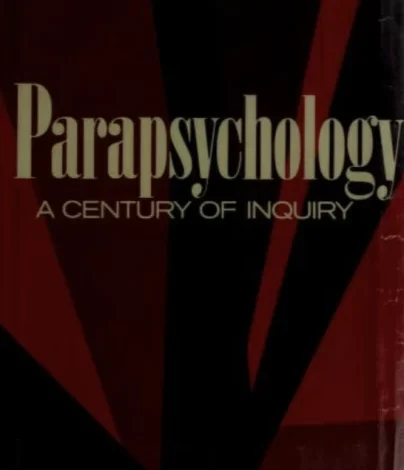
This week, I am highlighting Parapsychology: A century of enquiry by D. Scott Rogo
Who is D Scott Rogo?
Donald Scott Rogo, known by his author name D. Scott Rogo, was an American writer and journalist most known for his musings related to parapsychology. Rogo wrote or co-wrote 20 books and more than 100 magazine and journal articles. He was an active member of the Psychical Research Foundation. Rogo passed away in 1990 at the young age of 40 when he was stabbed in his home. His work is still referenced and is just as relevant today, maybe even more so than it ever was. If you want to read more about Rogo and his work, visit: https://psi-encyclopedia.spr.ac.uk/articles/d-scott-rogo
What is parapsychology?
Parapsychology is a field of study that investigates what is considered to be psychic phenomenon. Mainstream science considers this to be a pseudoscience with claims from the scientific community that the research of the past has failed to prove anything. While to a lot of scientists it is a taboo area that gathers a lot of criticism, science has over the years become more and more open-minded toward this field. Psychology refers to the study of human behaviours and the mental process. Parapsychology is an extension of this and looks at the mental process and human behaviour which are inexplicable by what is considered to be orthodox science.
The term parapsychology was coined in 1889 by philosopher Max Dessoir. He was a German philosopher, psychologist and theorist of aesthetics. He wrote a paper in the German periodical Sphinx where he used the German translation of the term (Parapsychologie). He went on to say: “If one … characterizes by para- something going beyond or besides the ordinary, than one could perhaps call the phenomena that step outside the usual process of the inner life parapsychical, and the science dealing with them parapsychology. The word is not nice, yet in my opinion it has the advantage to denote a hitherto unknown fringe area between the average and the pathological states; however, more than the limited value of practical usefulness such neologisms do not demand.“
In the 1930’s J.B Rhine adopted the English translation of this term to replace the phrase: physical research. He was thought to have founded parapsychology as we know it today as a branch of psychology. He focused his research on experimenting with test subjects. It is thought of as almost like experimental psychology. Rhine himself is well known for establishing Parapsychology institutes. First was the Parapsychology lab at Duke University, founding the Journal of Parapsychology and the Parapsychology Institute and what is now known today as the Rhine Research Centre.
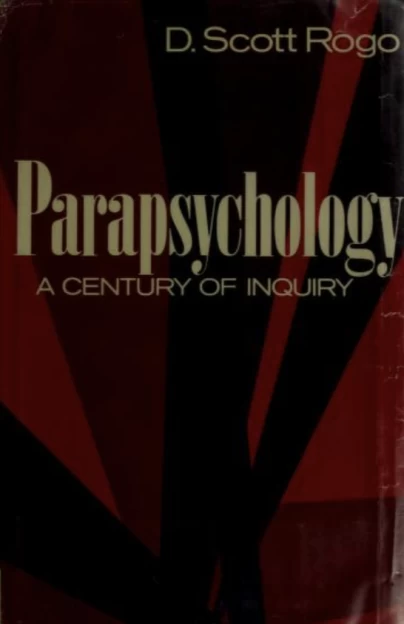
Parapsychology: A Century of Enquiry
Are we more than our physical bodies? Do we survive bodily death? Does precognition, telepathy, distant healing, clairvoyance and ESP exist? How about near-death experiences, out-of-body experiences, remote viewing, Peak in Darien experiences and Deathbed Visions?
In Parapsychology: A Century of Enquiry, D. Scott Rogo, one of the most prolific investigative journalists in the genre, examined anomalous phenomena in his own compelling, engaging style before his life was cut short in 1991.
It’s a subject-arguably the most important subject-where there are countless examples of anecdotal evidence but very few ways of measuring and predicting outcomes, therefore materialist science maintains, “There’s no scientific evidence; it’s a coincidence; wish fulfilment, confirmation bias; the law of large numbers, delusion or a hallucination.
The scientific debate has raged since the mid 1800s. Meanwhile, the phenomena continues to occur, and with the advent of the internet we can see it happens all over the world and has throughout history.
I have a few of Rogo’s physical books and I always find them quite insightful. They are full of theories and a wealth of information and really for people that are looking toward other explanations than ‘a ghost is a person who has passed’. It looks at experiences in much more detail and looks at what we humans just might be capable of. As the description says, this book looks at the weird and wonderful world of parapsychology, one of my favourite topics. This book is available to read for free through Internet Archive (you will have to sign in to read it in full and ‘borrow’ the book).
If you enjoy LLIFS, consider buying me a book (otherwise known as buy me a coffee but I don’t drink coffee and I LOVE books). Your donation helps to fund the LLIFS website so everyone can continue to access great paranormal content and resources for FREE!