Haunted Statue Legend & Location
[Updated on: August 8, 2025]

Stay Informed on the Unexplained
Every Friday we send out the top 5 most intriguing UFO & paranormal stories—direct to your inbox.
Subscribe to the Newsletter
Black aggie is one of America’s most talked-about haunted statues. The figure looks grim, the pose is heavy, and the stories are chilling. As a result, night visitors traded dares. In addition, locals repeated warnings. Soon, the legend spread far beyond the cemetery gates.
Black Aggie origins and controversial beginnings
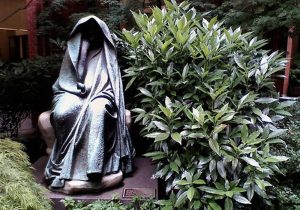
The statue was an unauthorized copy by Edward L. A. Pausch, modeled after Augustus Saint-Gaudens’ “Grief” in Washington, D.C. It stood on General Felix Agnus’s grave at Druid Ridge Cemetery in Pikesville, Maryland, starting in 1926. Critics blasted the piece. Meanwhile, neighbors noticed trespassers and pranks. From day one, Black Aggie drew crowds—and trouble.
Black Aggie legends and creepy myths
By the 1950s, the stories hardened into lore. For example, people swore her eyes glowed red at midnight. Others claimed grass would not grow in her shadow. Fraternity pledges sat in her lap on a dare; one tale says a student died of fright. Furthermore, pregnant women were told to avoid her gaze because bad luck, and worse, might follow.
Key stories about Black Aggie
- Glowing eyes that appeared after dark, especially at midnight
- Shadow where grass allegedly refused to grow
- Fraternity dares tied to panic, injuries, and alleged deaths
- Vandalism and theft, including a missing arm
Removal and secret relocation
Vandalism kept escalating. Therefore, the Agnus family donated the statue to the Smithsonian American Art Museum in 1967. Officials stored the monument for years. Then, in 1996, investigators reported a quiet move to a small courtyard behind the Dolley Madison House in Washington, D.C. Today, Black Aggie sits there—away from the graves that made her a legend.
 Why the legend still haunts imagination
The current site shows no confirmed activity. Even so, the myth refuses to die. Online threads resurface the tales. Likewise, paranormal blogs keep the story in view. Consequently, tourists still visit the empty pedestal at Druid Ridge. The gap itself feels like a message: legends outlast locations.
Modern legacy
This monument blends art history, controversy, and folklore. Because the ingredients are simple—death, darkness, and a human face—we keep looking. In turn, the legend renews itself with each retelling. Ultimately, Black Aggie remains a memorable figure in American ghost lore and cemetery art.